Showing posts with label victoria. Show all posts

Friday, May 10, 2013

The Lakeshore Town of Victoria, Laguna


 * starting up the Victoria tour

* sky views

The last few months of the previous year were spent shuttling for work and visiting places in our province (can’t go too far yet because of work). One time, our random weekend travel turned into a town-to-town travel the start of which was the placid town of Victoria, Laguna.


* a preview of what eventually saw: boats, and boats, and boats
 

 * and boats, and boats, and boats

Named after a former Philippine president’s daughter, the town of Victoria did not start out a separate town but rather as a component village of the town of Pila. Nevertheless independence was soon granted for this lake shore town.


* talaba shells


* surprisingly enough, some trees grow along the shores

 * game for an afternoon swim

 * Pransis in contemplation

 * a cluster of houses near the lake shore

* some of the houses in Victoria, Laguna

The longish travel to the place equates to peacefulness that are now absent even to some provincials towns. One good experience as a visitor in this place is to visit the areas closest to the Laguna Lake. Here we were able to talk to some residents whose life depended on the riches of the lake. Although their houses have been wrecked many times by typhoons owing of course to their proximity to a body of water, it did not stop them from living along the lakeside. If one is game enough, you can do a short swim in the lake. Unfortunately, we could not do so without extra clothing.


 * the church facade 
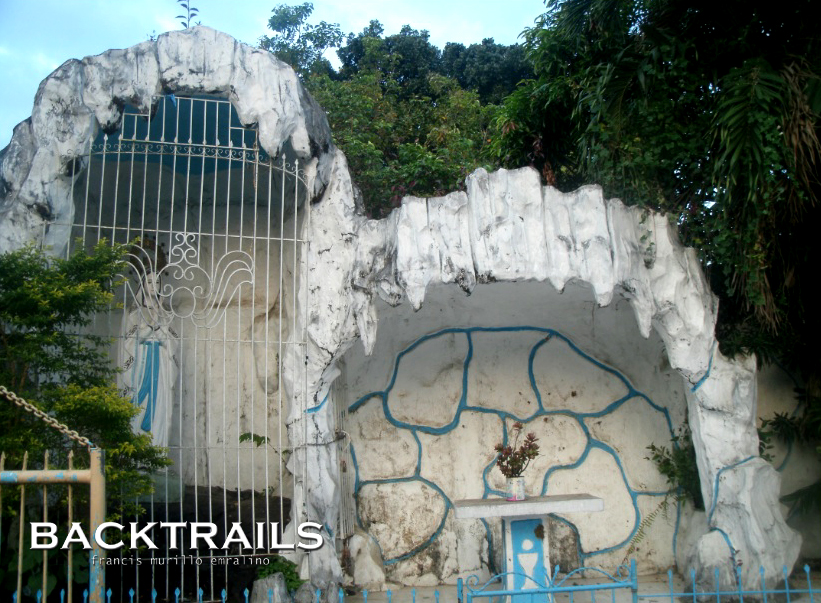
 * an outside grotto

The town as a whole still retains Spanish/American traces: old, wooden houses and the clustering of important establishments such as the town hall, church, and market place. The church is a recent construction, 1963, followed next year by the convent. It is officially called La Resurreccion Parish under the Dioces of San Pablo.


* stalls in Masapang selling duck products

 
 * behold, fried duck!
 
 * itlog na pula

Duck and all the Derivative Products

Aside from the historical backgrounds Victoria is quite famous for its duck products. I remember watching that episode of Amazing Race in the Philippines where Victoria was part of. That episode included ducks, of course. After our visit, we opted to make a stopover in Masapang to buy some of the town’s products. We had fried duck and itlog na pula. Note that duck meat tastes different from chicken meat but will appreciate the food is prepared well.

[How to go to Victoria, Laguna: From Manila one can board a bus bound to Sta. Cruz, Laguna. There are buses along Taft Avenue near Gil Puyat LRT Station (Greenstar, DLTB) or along EDSA (HM). Drop off at Victoria, specifically on the corner going to the actual town proper (this will be on the left side if you are coming from Manila). One marker you can use is that this corner will be found after passing the area called Masapang. From there, you can hail a tricycle to take you to Victoria town proper. Fare will depend on the number of passengers and the time of your ride.]
   

Monday, February 25, 2013

Laguna de Bay View from Victoria, Laguna


An unplanned travel brought us to Victoria, Laguna, home to famous poultry products. But that can be discussed in a future blog post. For now let me share a view of the scenic Laguna de Bay from the shores of Victoria. 

Sunday, October 24, 2010

A Walk through Sta. Cruz, Laguna

* a simple monument (probably for a prominent person from Sta. Cruz) found as one enter the town proper of Sta. Cruz

* the usual words of celebration found in almost all parts of Laguna

* a marker commemorating the bravery of the guerillas of Sta. Cruz who fought during World War II

* a view of the town park: simple yet relaxing, especially if you take a breather there at sunset

* a towering monument of Jose Rizal, one that identical to the monument found in Nagcarlan, Laguna

Sta. Cruz shows that a capital does not necessarily have to be literally in the center of a town or city or to be the hub of all economic activities. True, Sta. Cruz now has all the establishments it needs to thrive but at first glance, it would seem that its distance (as compared to Calamaba for instance) is a turn-off to business ventures. But it has held the title of Laguna’s capital and despite the distance it is a fast developing town. I wonder if there is already a move to elevate it to a city.

Another good thing about the town, similar to the towns after Bay (that is, Victoria and Pila), is that it was able to maintain the town atmosphere. In common language, the bayan feel. I don’t know if a chance reader can relate to it. You try to take a short rest at the town’s park around sunset and you’ll get a blast of a relaxing view: small stalls selling merienda; children playing on the ground; and the beautiful sky turning into crimson as the sun sets in the west. Jeepneys are present on one side of the town center but for me, they are not as bothersome as the jeepneys in Calamba, Los Baños, or San Pablo. Someone may chance upon this entry and contradict this observation, but I can counter that how you see a town or any other place is something that is personal in nature. Kanya-kanya ‘yan.

* one thing I find lovely about the shops in Sta. Cruz: the display windows!

* one of the many stores in the town market selling native products; it seems that the town is specializing in such products

* a night scene at a busy street in Sta. Cruz

* an arc put up at a bridge that traverses the Sta. Cruz river

* I would concede that this shot is not so informative, but the view of the Sta. Cruz river the night we visited it was simply overwhelming

At the park is a marker saying that it was the place where Wha–Chi guerillas (Philippine-Chinese Anti-Japanese Guerilla Force) fought against the Japanese that led to the liberation of the town on January 26, 1945. The town church where the Japanese confined themselves was successfully captured through the combined forces of the HUKBALAHAP and Hunter’s ROTC.

As I have said earlier, a revisit to Sta. Cruz is necessary. I am yet to allot time for full-blown trips to places in the country which shall primarily deal on walking through streets and digging into details of churches and old houses and structures and (hopefully) spending a few days in the places we are to visit.

Monday, August 2, 2010

The Rust Connection: Calauan, Laguna

* the church of Calauan

* the interior of the church

* part of Liceo de Calauan

* a marker in memory of the USAFFE soldiers and guerillas who fought during the World War II

* the famous Piña at the center of its plaza

* the municipal building built in 1957 during the term of Juan V. Brion

* view of a mountain (which I failed to identify) from a road leading to Victoria, Laguna

* view of the strong Mount Kalisungan (Bundok ng Tikew) from barangay Imok

The town of Calauan lies on the plains on the central part of Laguna, a town that is as close to my heart as Los Baños, for I had to pass through it every day during my undergraduate days.

On high days of May, the aroma of fresh pineapples shall fill the air. The Pineapple Festival is at hand and the fruits are overflowing on the streets, being sold to the general public.

I still hear people say to drivers “Kalawang” which has its own basis more or less. Stories have it that there was once a spring called Makalawang where rusts gushed forth. It seems ironic for there are vast lands for rice farming. The smell of the rice fields is a treat also as one travels through the main highway that traverses these fields.

The town church which is strategically located at the very heart of the town has San Isidro Labrador as its patron saint. It was built in 1860 through the efforts of a Don Andres Roxas and his wife. The ground where the church stands was later donated in 1925 by Andres Soriano. Its belfry, on the other hands, was made in 1961. When the Diocese of San Pablo was created, the first bishop resided in Calauan.

Similar to San Pablo, there’s this observable absence of bahay-na-bato near the town plaza. I am wondering if it suffered the same fate as our city – that those precious houses were either destroyed by some natural disaster or fire; or they were forced to the ground by the Second World War.

If one enjoys watching lightning, Calauan is the place to be. Especially during the rainy seasons, when just looking up the skies, one can behold the feats of the clouds, rains, lightning, and thunders.